
Key Takeaways
- Microneedling works by creating tiny, controlled punctures in the skin that trigger your body's natural healing process, which includes producing new collagen and elastin.
- Dermatologists commonly use microneedling to address acne scars, uneven texture, large pores, fine lines, and dark spots.
- Results build gradually over several weeks to months as new collagen forms, rather than appearing immediately after treatment.
- Microneedling improves the skin's structure and texture over time, but it isn't a substitute for medical treatments and won't produce dramatic, instant changes.
- Peach Dermatology offers microneedling as part of a personalized skincare plan for patients in Suwanee and Flowery Branch, GA, starting with a complimentary cosmetic consultation available Mondays and Wednesdays.
How Microneedling Stimulates Collagen and Elastin Production
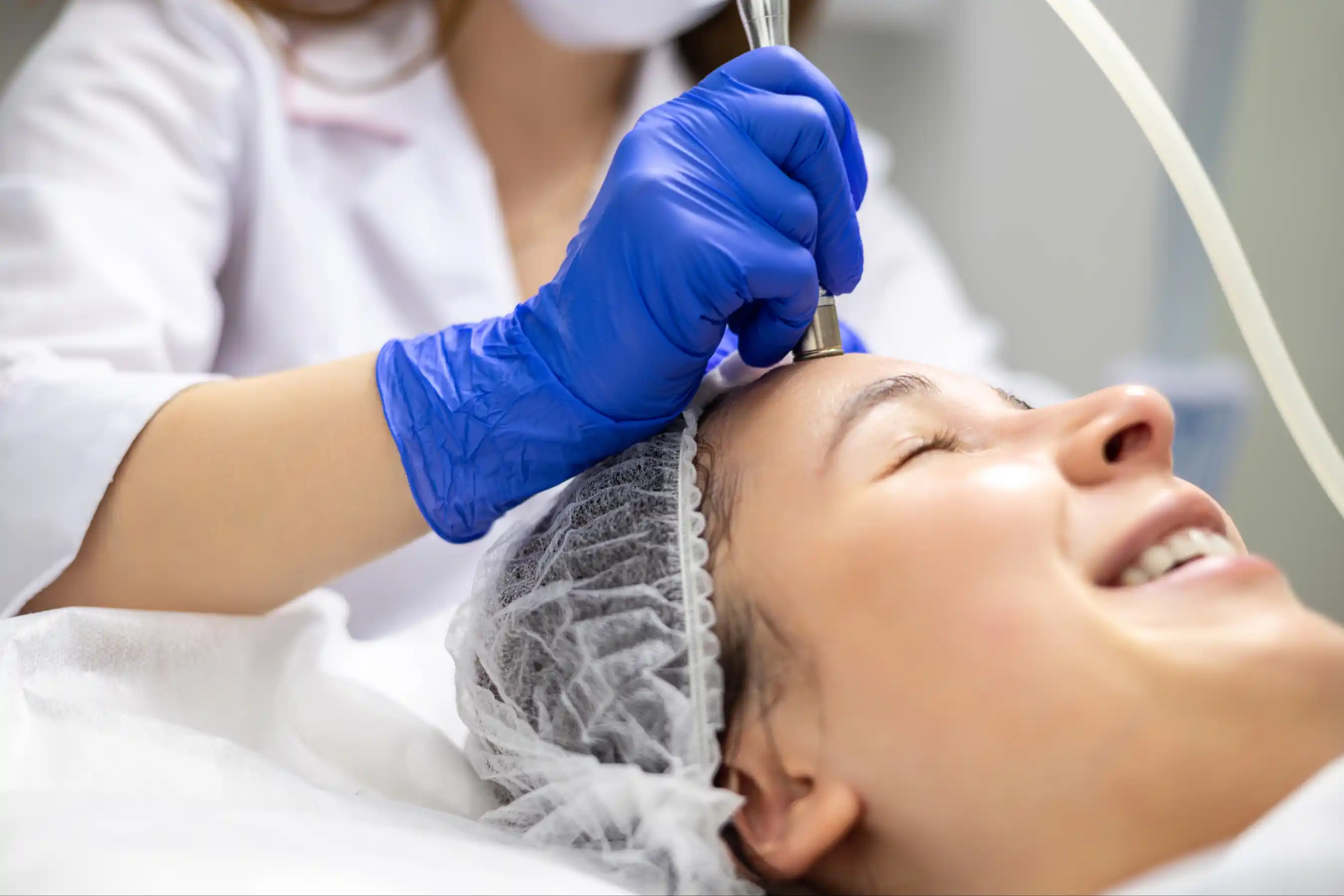
Microneedling is a medical treatment that uses a device with tiny needles to create controlled, precise punctures across the skin's surface. According to the American Academy of Dermatology, microneedling works by stimulating your body to make collagen, which is why it's also called collagen induction therapy.
Those tiny punctures are intentional. When the skin detects this controlled injury, it responds the same way it would to any minor wound: by launching a healing process that includes producing fresh collagen and elastin, the proteins responsible for keeping skin firm, smooth, and resilient. When properly performed, the body heals those tiny punctures with just the right amount of new collagen, which is what leads to smoother texture and a more even tone over time.
At Peach Dermatology, the cosmetic dermatology page describes microneedling as a minimally invasive facial treatment that encourages the skin's natural rejuvenation process while a serum is applied during treatment to further support collagen and elastin growth. The precision of the device used matters here, since it needs to reach the right depth in the skin to trigger this response without causing unnecessary damage.
What Skin Concerns Microneedling Is Commonly Used to Address
Microneedling isn't a single-purpose treatment. Dermatologists use it for a range of skin concerns, and the American Academy of Dermatology lists these as the most common:
- Acne scars
- Dark spots
- Large pores
- Melasma, a condition that causes patchy skin discoloration
- Sagging skin
- Scars from surgery or an injury
- Stretch marks
- Uneven skin texture and tone
- Wrinkles and fine lines
Because it addresses the skin's structure rather than just its surface, microneedling is often part of a broader plan rather than a single fix for one specific issue.
How Results Typically Develop Over Time
One of the most common misconceptions about microneedling is expecting to see results right away. That's not how the treatment works, because the visible improvement depends on collagen actually forming and maturing in the skin, a process that takes time.
| Timeframe | What's Happening |
|---|---|
| First 24 to 48 hours | Skin appears red and mildly swollen, similar to a mild sunburn, as the healing response begins |
| First 1 to 2 weeks | Initial redness fades; tiny puncture marks are no longer visible |
| 4 to 6 weeks | New collagen begins forming, and some improvement in texture may become noticeable |
| 3 to 6 months | Continued collagen remodeling produces the fullest visible results |
Most patients complete a series of sessions, typically spaced several weeks apart, rather than a single treatment. This spacing gives the skin time to complete its healing cycle between sessions rather than layering new micro-injuries on top of skin that hasn't finished repairing itself.
What Microneedling Doesn't Do
Setting realistic expectations matters as much as understanding what microneedling can achieve. It is a skin rejuvenation treatment, not a medical cure, and it works gradually rather than producing an overnight transformation.
Microneedling will not:
- Replace treatment for active skin conditions like moderate to severe acne, which typically need a targeted medical approach first.
- Produce results comparable to surgical procedures for significant sagging or deep wrinkles.
- Deliver permanent, one-and-done results. Skin continues to age, so periodic maintenance sessions are often part of a long-term plan.
- Work identically for every patient. Skin type, the specific concern being treated, and how consistently a patient follows aftercare all affect the outcome.
Understanding these limits upfront helps patients feel confident about their results rather than disappointed by expectations the treatment was never designed to meet.
How Microneedling Fits Into a Broader Skincare or Treatment Plan
Microneedling is often most effective as one part of a larger plan rather than a standalone fix. At Peach Dermatology, it's frequently paired with other cosmetic dermatology services depending on a patient's specific goals, since combining treatments can address different aspects of the same concern.
A licensed aesthetician can help map out where microneedling fits for an individual patient's skin, whether that means starting with microneedling alone or building it into a plan alongside other treatments. This is also where an accurate diagnosis matters. A concern that looks like it might respond well to microneedling could actually call for a different approach entirely, which is why a consultation comes before any treatment plan is finalized.
Find Out What Microneedling Could Do for Your Skin
Microneedling works by putting your skin's own healing process to work, gradually rebuilding collagen and elastin rather than delivering an instant fix. Knowing what it can realistically achieve, and how long that process takes, helps set expectations that match how the treatment actually works.
Peach Dermatology offers a complimentary cosmetic consultation with its aesthetician on Mondays and Wednesdays to talk through whether microneedling fits your specific skin concerns. Schedule a consultation at the Suwanee or Flowery Branch, GA office to get started.
Frequently Asked Questions
What does microneedling do?
Microneedling creates controlled, tiny punctures in the skin that trigger your body's natural healing response, including the production of new collagen and elastin. Over several weeks to months, this can lead to smoother texture, a more even tone, and diminished scarring.
What are the benefits of microneedling?
Microneedling is commonly used to diminish acne scars, dark spots, large pores, uneven texture, fine lines, and stretch marks. Because it's minimally invasive, it's considered safe for all skin tones when performed by a trained provider.
Does microneedling actually help with skin texture?
Yes. Because microneedling stimulates new collagen production in the deeper layers of skin, it can meaningfully improve overall texture over the course of a treatment series, though results build gradually rather than appearing immediately.
What is collagen induction and how does microneedling trigger it?
Collagen induction refers to the skin's natural process of producing new collagen in response to controlled micro-injury. Microneedling triggers this by puncturing the skin's surface just enough to activate the body's repair process without causing lasting damage.
Where can I get microneedling near me in Suwanee, GA?
Peach Dermatology offers microneedling at its Suwanee and Flowery Branch, GA locations, with a complimentary cosmetic consultation available Mondays and Wednesdays to discuss whether it fits your skin goals.
